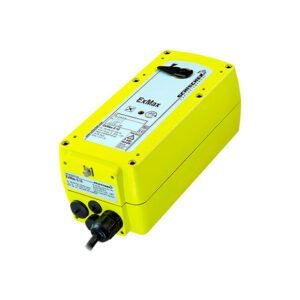
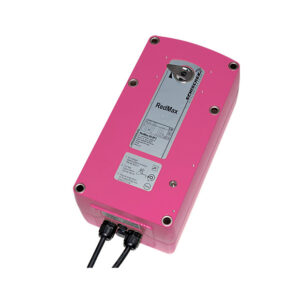
ATEX electric actuators are designed to automate the movement of valves, dampers, shutters and other mechanical equipment installed in potentially explosive atmospheres. At Inpratex, we offer a range of ATEX-certified actuators for hazardous areas, suitable for industrial applications where flammable gases, vapours, mists or combustible dust may be present. Our range includes quarter-turn ATEX electric actuators, designed to perform opening, closing or positioning operations in process systems, ventilation, extraction, fluid handling or flow control applications. These units make it possible to automate operations that require precision, repeatability and safety in demanding industrial environments.
ATEX actuators are particularly suitable for operating ball valves, butterfly valves, ventilation dampers, shutters, registers and other elements that must operate in areas with risk of explosion. Depending on the selected model, they can be used in Zones 1 and 2 for gases, as well as in Zones 21 and 22 for dust.
Thanks to their different control options, ATEX electric actuators can be integrated into automation systems, control panels, PLCs, SCADA systems or industrial supervision installations. This makes it possible to manage local or remote operations, monitor open and closed positions, improve process safety and optimise the operation of equipment located in hazardous areas.
Their robust design allows reliable operation in severe conditions, with the presence of dust, humidity, vibration, temperature changes or corrosive atmospheres. For this reason, ATEX electric actuators are suitable for chemical and petrochemical plants, refineries, pharmaceutical facilities, power plants, offshore platforms, the marine industry, process areas, industrial ventilation systems and storage areas for flammable products.
At Inpratex, we help you select the most suitable ATEX electric actuator according to the installation zone, type of explosive atmosphere, element to be operated, required torque, type of operation, control signal, available power supply, degree of protection and the specific conditions of each project.