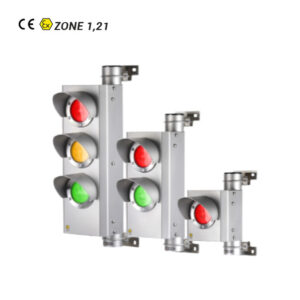
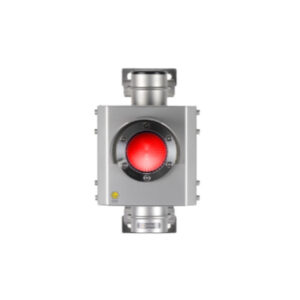
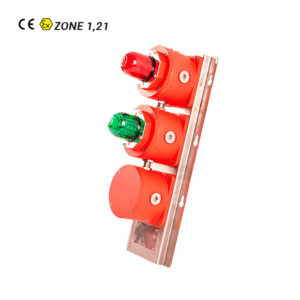
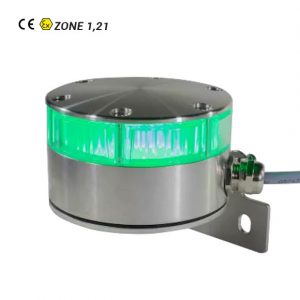
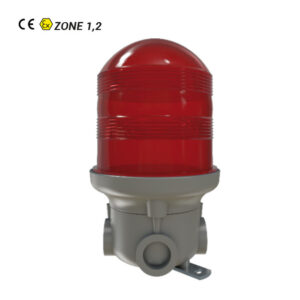
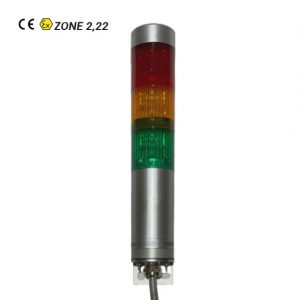
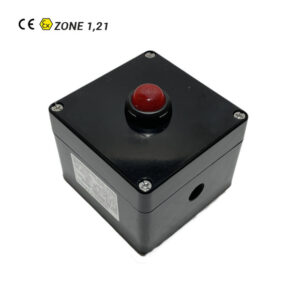
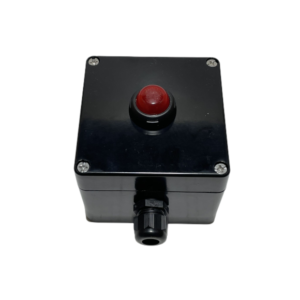
ATEX-certified optical signalling equipment for hazardous areas.
ATEX optical signalling devices are designed to provide clear and effective visual warnings in industrial installations with explosion risk. These devices make it possible to indicate operating states, warnings or alarms through highly visible light signals, ensuring fast and reliable communication even in demanding environmental conditions.
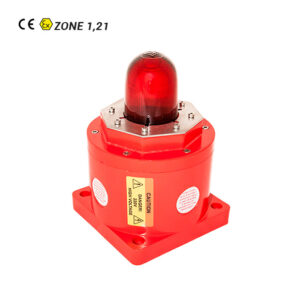
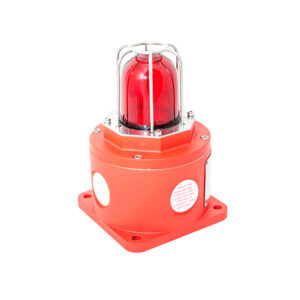
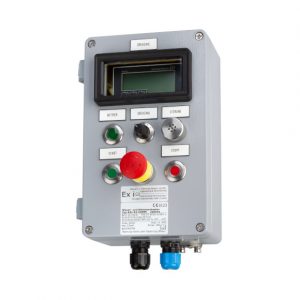
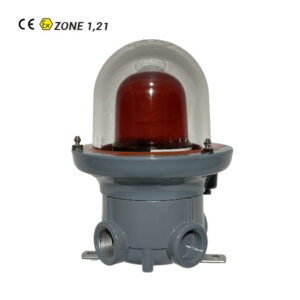
Inpratex’s range of ATEX optical signalling equipment includes beacons, signalling lamps, LED indicator lights, industrial traffic lights, signal towers and strobe lights, all certified for installation in classified areas where explosive atmospheres may occur due to the presence of gases, vapours or combustible dust. These devices are particularly suitable for sectors such as oil & gas, chemical and petrochemical industries, process plants, energy facilities, marine environments and other industrial installations where safety is a critical factor.
Manufactured with highly resistant materials and high degrees of protection against external agents, ATEX optical signalling devices ensure reliable and durable signalling in both indoor and outdoor applications. Their robust design and high-efficiency LED technology provide powerful light output, long-distance visibility and reduced maintenance requirements.
Thanks to the wide variety of formats, colours and operating modes available, ATEX optical signalling equipment can be adapted to a wide range of industrial applications, facilitating the quick identification of machine status, process conditions or emergency situations in potentially explosive atmospheres.
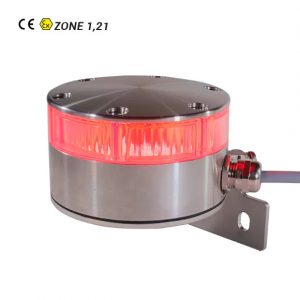
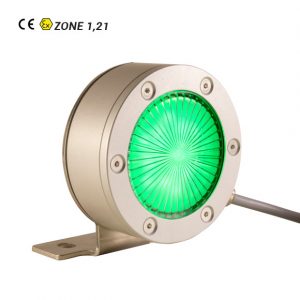
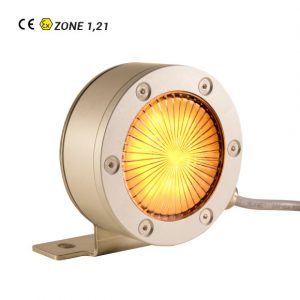
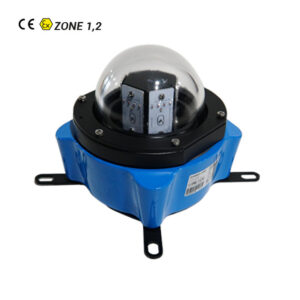
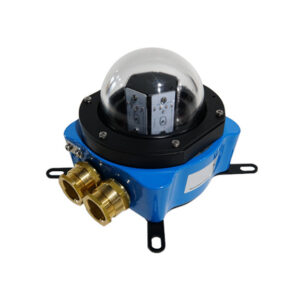
ATEX Optical Signalling Equipment for Zones 1 or 21
ATEX Zones 1 and 21 are areas where the presence of an explosive atmosphere is likely to occur during normal operation. Zone 1 refers to environments with flammable gases, vapours or mists, while Zone 21 applies to areas where combustible dust is likely to be present in suspension. Equipment certified for zones 1 and 21 may also be installed in zones 2 and 22.
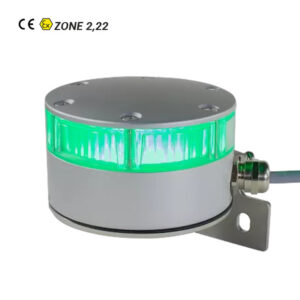
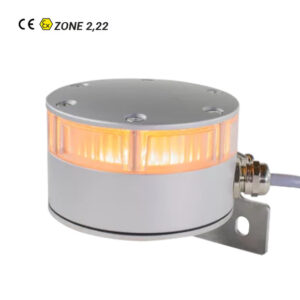
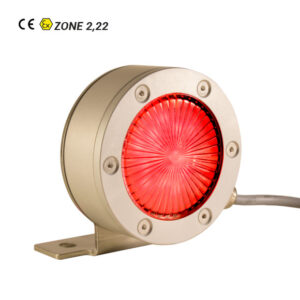
ATEX Optical Signalling Equipment for Zones 2 or 22
ATEX Zones 2 and 22 are areas where the formation of an explosive atmosphere is unlikely and, if it occurs, it will only be present occasionally and for short periods of time. Zone 2 refers to the presence of flammable gases, vapours or mists, while Zone 22 applies to environments where combustible dust may be present. Equipment certified only for zones 2 and 22 may not be installed in zones 1 and 21.